Application Requirements
Confirm system voltage, usable capacity, continuous and peak current, charger profile, installation space and expected daily energy use.
Battery Pack Options
LiFePO4 deep-cycle RV batteries for 12V or 24V systems, including Bluetooth, heating, communication or project-specific enclosure options.
Typical Applications
RVs, campers, trailers, mobile workshops and off-grid solar backup systems.
Customization Support
Capacity, terminals, BMS settings, communication, case, mounting, label and packaging can be reviewed for OEM or fleet projects.
Quality and Production Support
Cell matching, protection testing, capacity verification and shipment documentation can be arranged according to battery model and project requirements.
Project Information Needed
Send your existing battery model, voltage, capacity, load current, charger details, installation space, application and estimated quantity.
How Buyers Evaluate RV Lithium Battery Manufacturers
RV brands, converters and distributors do not simply buy amp-hours. They need a dependable mobile-power package that is easy to specify, install and support in the field. Traditional RV systems often combine separate batteries, an inverter, chargers and additional wiring; an integrated LiFePO4 solution can simplify that conversation by matching usable capacity, protection, terminals and charging behavior to one approved project brief. For a buyer, the important questions are which appliances must run, how the vehicle is charged, whether solar is fitted and what physical space is available. The most useful starting point is the existing battery or device specification, together with the expected daily load, charging source and available installation space.
Battery Design for the Complete System
An RV battery must work with the entire vehicle electrical system. In addition to nominal voltage and capacity, ASOL reviews continuous and peak appliance loads, inverter demand, DC charging, solar-controller parameters, alternator charging and low-temperature use. Battery terminals, fuse strategy, BMS protection, communication, heating and the enclosure can then be selected for the actual build rather than added as afterthoughts. This is especially useful for campervans, travel trailers and mobile-workshop projects where installation space and service access are limited. Reviewing these factors early helps prevent expensive changes after a prototype has been installed or a production line has been prepared.
OEM Manufacturing, Documentation and Project Planning
ASOL supports battery-pack assembly projects from requirements review through cell matching, protection design, wiring, connector selection, labeling, validation and batch production. Production planning is based on the approved drawing, bill of materials, test requirements and order forecast rather than a generic catalogue promise. Sample development and evaluation are available for selected cylindrical and lithium polymer battery projects, subject to specification review and project requirements. MOQ and batch lead time vary by pack structure, custom parts and order quantity. Documentation such as UN38.3, RoHS, MSDS or other project-related documents can be provided according to the confirmed battery specification and project requirements.
Lifecycle Cost and Supply Decisions
Lead-acid and AGM batteries may appear less expensive at the first purchase, but their usable capacity is commonly limited, capacity can fade with cycling and replacement cycles add freight, installation and warranty cost. A correctly specified LiFePO4 system offers a flatter voltage curve and substantially more usable energy. For long-term RV use, buyers often compare one LiFePO4 system designed for a multi-year service plan with several lead-acid replacement cycles over a ten-year ownership period. The actual saving depends on duty cycle, local pricing, charging practice and system design, so ASOL can review the assumptions instead of presenting a generic price claim. For distributors and OEM teams, this is usually more meaningful than comparing only the initial price of two packs with the same voltage and capacity label.
What to Send for a Practical Quotation
For an RV or camper project, send the current battery label or group size, voltage and target capacity, inverter and charger details, solar-controller information, maximum load, available mounting space, terminals, expected annual quantity and destination market. These details allow ASOL to assess whether the project needs a direct lead-acid replacement, a deep-cycle battery bank or an integrated mobile-power solution, then confirm the applicable MOQ and production plan. ASOL can then recommend a project-appropriate battery solution and a realistic development or production path.
Need an application battery solution?
Send your voltage, capacity, battery space, connector, application and quantity. ASOL will recommend a suitable lithium battery pack solution for your device.
Recommended Battery Solutions
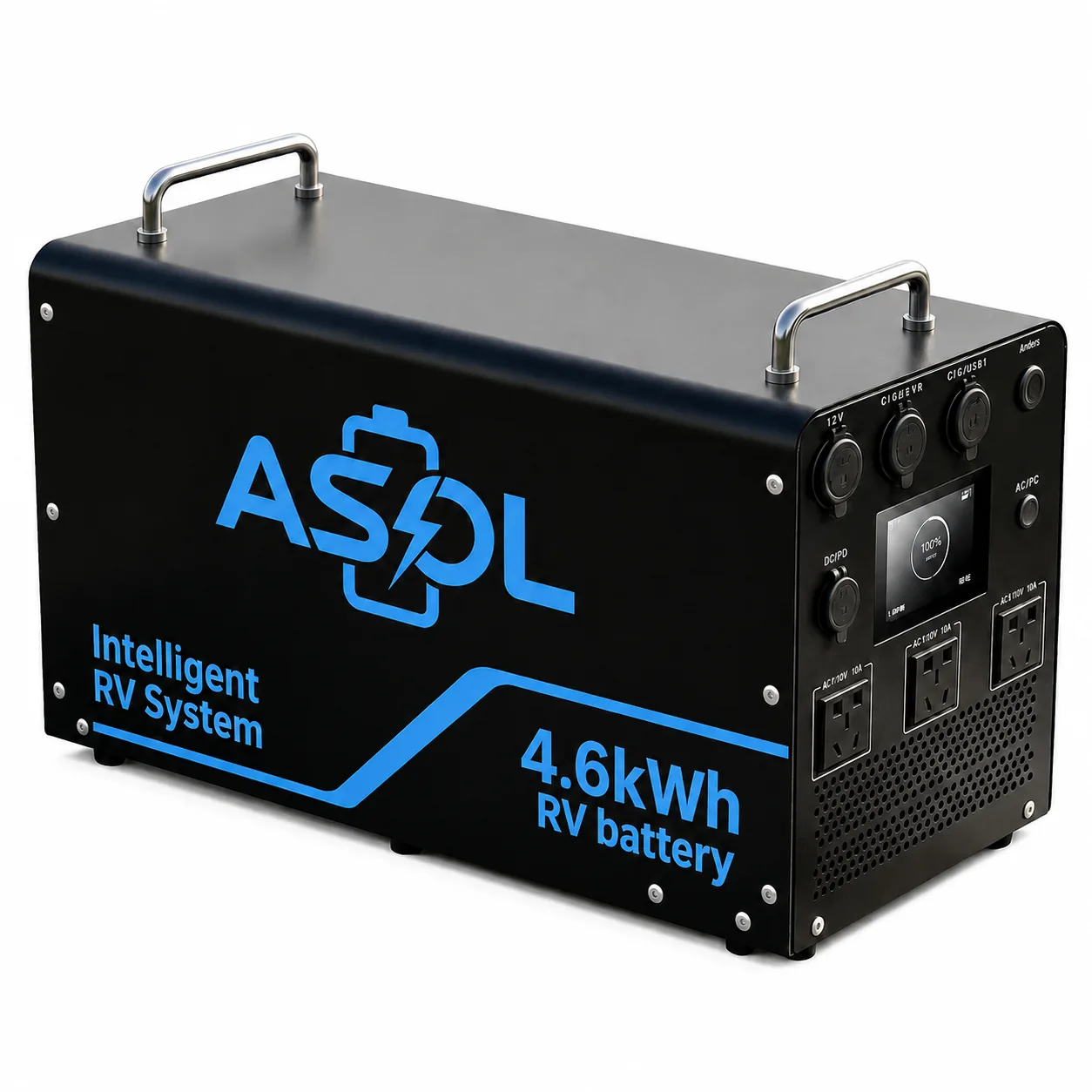
A complete RV LiFePO4 battery for camper and mobile-power projects.
FAQ
Can ASOL supply LiFePO4 batteries for RV projects?
Yes. ASOL supplies LiFePO4 battery solutions for RV, camper and mobile-power projects, including lead-acid replacement applications.
Can the RV battery be matched to a solar or charger system?
Yes. Share the charger, inverter and solar-controller details so the battery voltage, BMS and charging profile can be reviewed.
What information is needed for an RV battery quote?
Please send your existing battery model, voltage, capacity, load current, installation space, charger details and estimated quantity.
What is the MOQ for an OEM How to Choose an RV Lithium Battery project?
MOQ depends on the selected cells, pack structure, housing, customization level and order plan. Standard configurations usually have a lower starting quantity than a new fully custom design; ASOL confirms the applicable MOQ with the quotation.
Can ASOL provide private label or OEM branding?
Yes. Label artwork, logo, packaging, carton marks and selected casing details can be reviewed after the battery specification and compliance requirements are confirmed.
Which projects are eligible for sample development?
Sample development and evaluation are available for selected cylindrical and lithium polymer battery projects, subject to specification review and project requirements. Production lead time is confirmed after the final specification, order quantity and packaging requirements are agreed.
Which documentation can be provided?
Documentation such as UN38.3, RoHS, MSDS or other project-related documents can be provided according to the confirmed battery specification and project requirements.
What happens after I submit an inquiry?
ASOL reviews the application, voltage, capacity, load, battery space, charging method, connector, documentation needs and estimated quantity. The team then recommends a suitable pack structure and confirms the next step for an eligible sample project or production.